Why We Do Not Trade Every Liquidity Alert
A practical explanation of why alerts are treated as research context, and why the best trade can be waiting for the retest instead of chasing the alert.
An alert is a flag, not permission
The system can detect a pattern before the trade is ready. That is useful, but it is also dangerous if a trader treats every alert as an entry.
A good alert says: look here. A good trader then asks: is price at the right location, is the auction aligned, and is the risk still clean?
Why the same alert can be high quality or low quality
If a sell alert fires after price has already dropped 20 pips, the idea may be correct but the entry may be late. If the same alert fires while price is retesting trapped-long supply, the entry can be much cleaner.
The signal is only one part of the decision. Location decides whether the risk-to-reward is still professional.
The three checks before action
Before using any alert, run three checks: auction agreement, liquidity agreement, and price location.
If all three agree, it may deserve a planned limit order. If only one agrees, it belongs in the research log, not in the broker terminal.
- Auction agreement: value is migrating in the same direction.
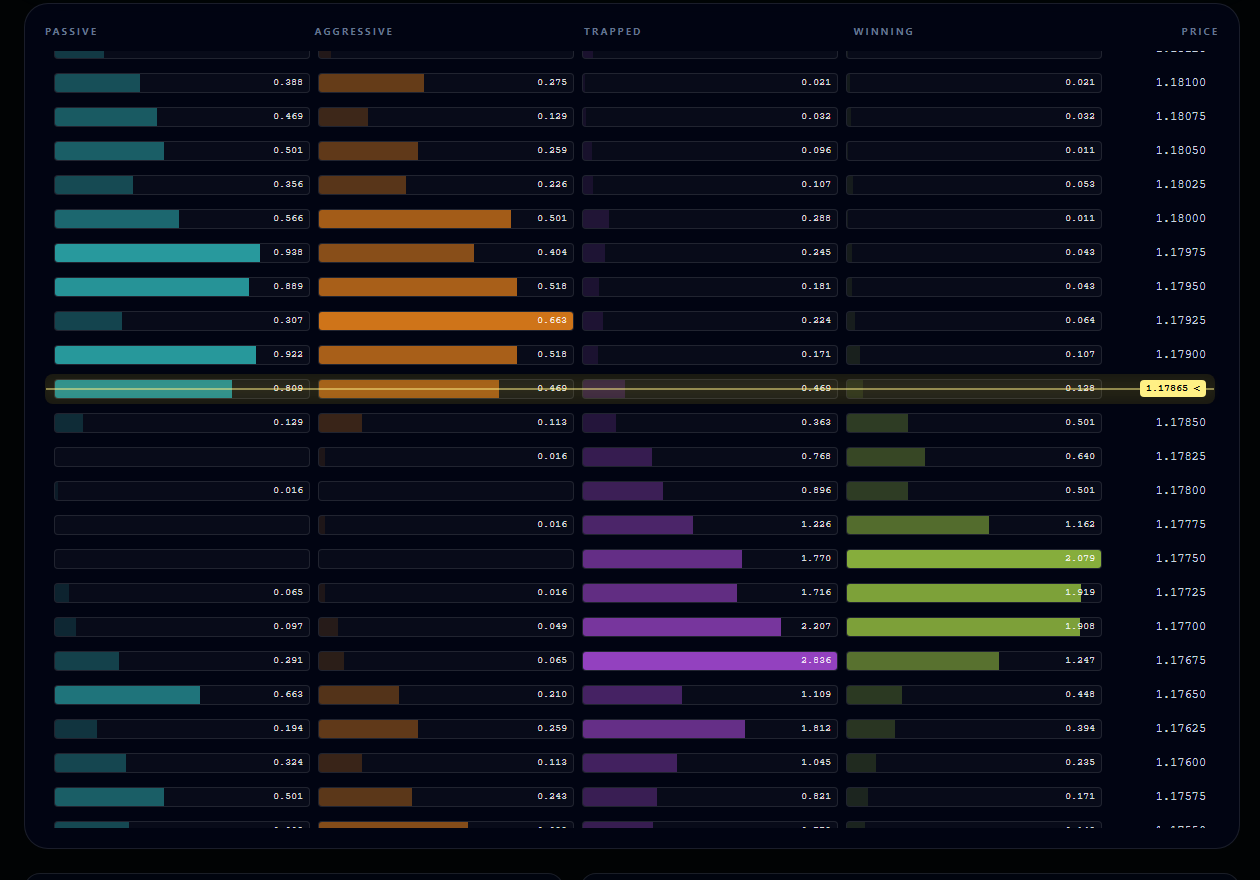
- Liquidity agreement: trapped inventory and passive pressure support the idea.
- Price location: entry is near a structural retest, not after a chase.
Why shadow mode matters
Shadow mode protects the research process. It lets the system collect evidence without pretending every pattern is already a live edge.
That is why we separate system research from operator execution. The alert can be right, the entry can be wrong, and the trade can still be avoided.
Use the platform as a decision process.
The goal is not to copy one level. The goal is to learn how auction value, retail behavior, liquidity pressure, delta, and risk rules combine into a trade idea.