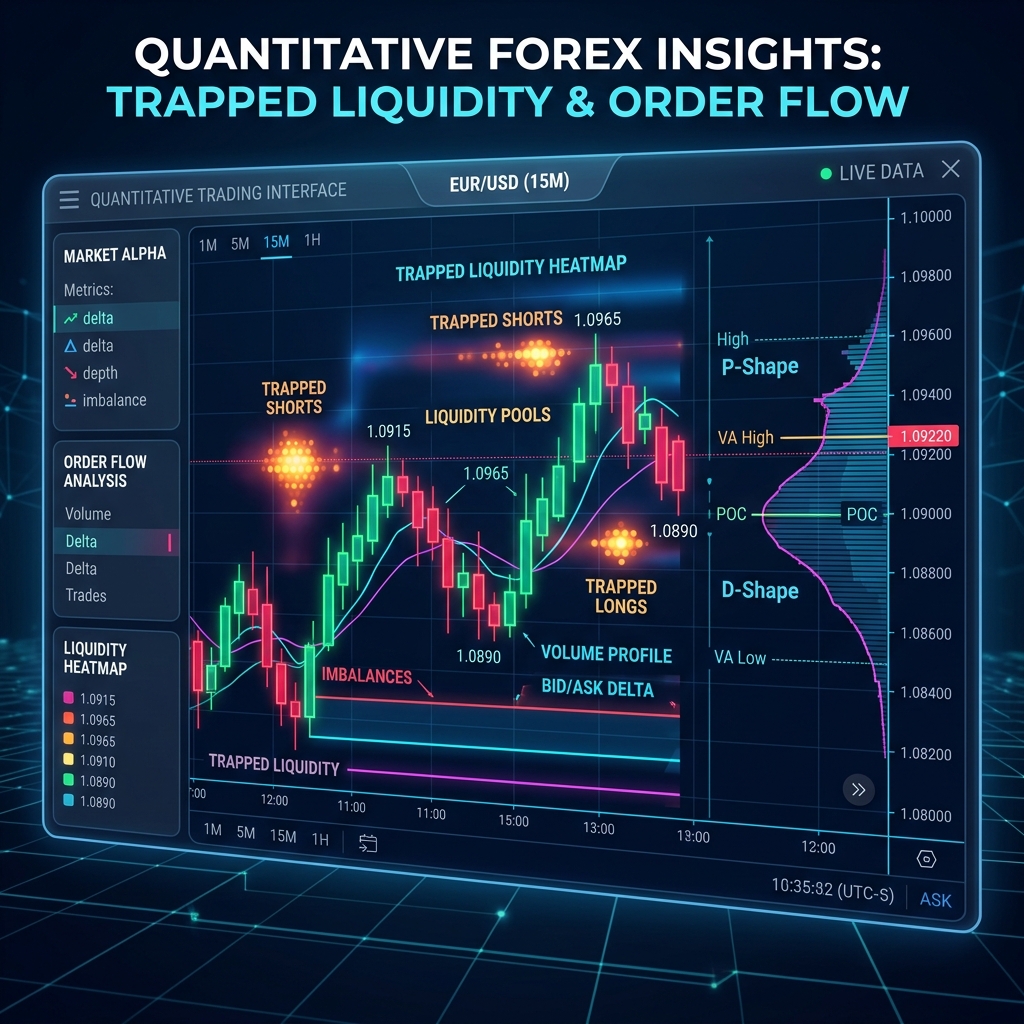
What A V-Shape Reversal Really Means In EURUSD
A V-shape is not automatically bullish or bearish. The real question is whether the recovery becomes accepted value or only squeezes into supply.
A V-shape is only a question
When EURUSD drops hard and then snaps back, it is tempting to call it a reversal. Sometimes it is. Sometimes it is only a short-cover squeeze into the next supply zone.
The V-shape itself does not answer the question. The answer comes from what happens after price reaches the prior rejection area.
Two types of V-shape
The first type is acceptance. Price recovers, holds above value, and the auction begins building business at higher prices. That can become a real bullish shift.
The second type is squeeze. Price recovers quickly, tags trapped inventory or passive supply, fails to hold, and rolls back down. That is not strength. That is liquidity being used.
- Accepted V-shape: price holds above value and builds a new POC.
- Squeeze V-shape: price spikes into supply, cannot hold, and loses the reclaimed zone.
- The difference is not the speed of the rally. The difference is acceptance after the rally.
The May 21 lesson
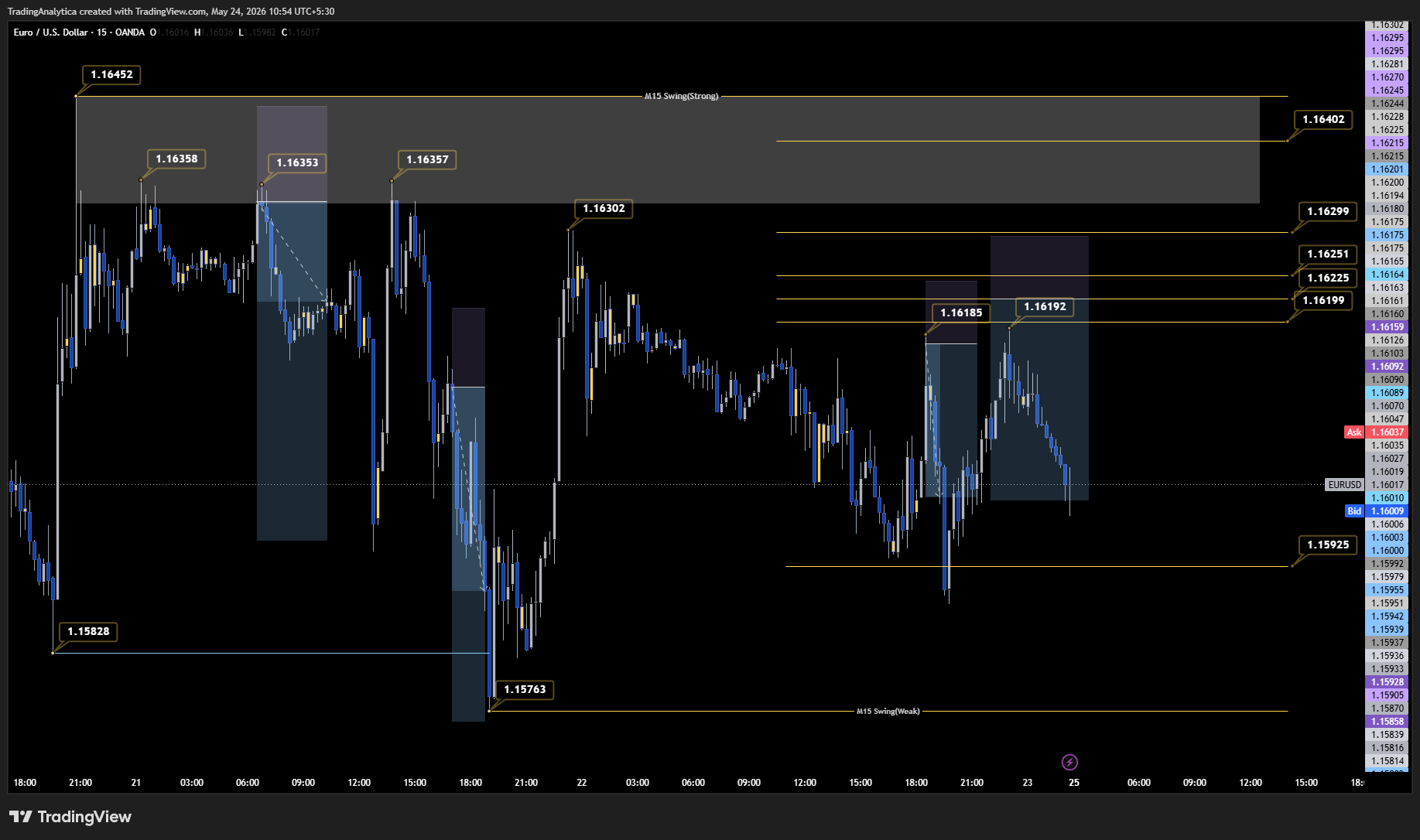
On May 21, EURUSD snapped from the London low near 1.15942 back toward 1.16357. That looked powerful on the chart.
But the upper zone had already rejected several times. When the recovery failed there and price later drove to 1.15763, the V-shape was revealed as a squeeze into supply, not a clean bullish regime change.
What to check before trusting it
Check whether price reclaims value and holds. Check whether retail behavior is chasing or unwinding. Check whether synthetic pressure stays supportive after the first burst. Check whether the liquidity shelf above price absorbs or breaks.
If those layers disagree, the V-shape is a warning, not a trade invitation.
Use the platform as a decision process.
The goal is not to copy one level. The goal is to learn how auction value, retail behavior, liquidity pressure, delta, and risk rules combine into a trade idea.