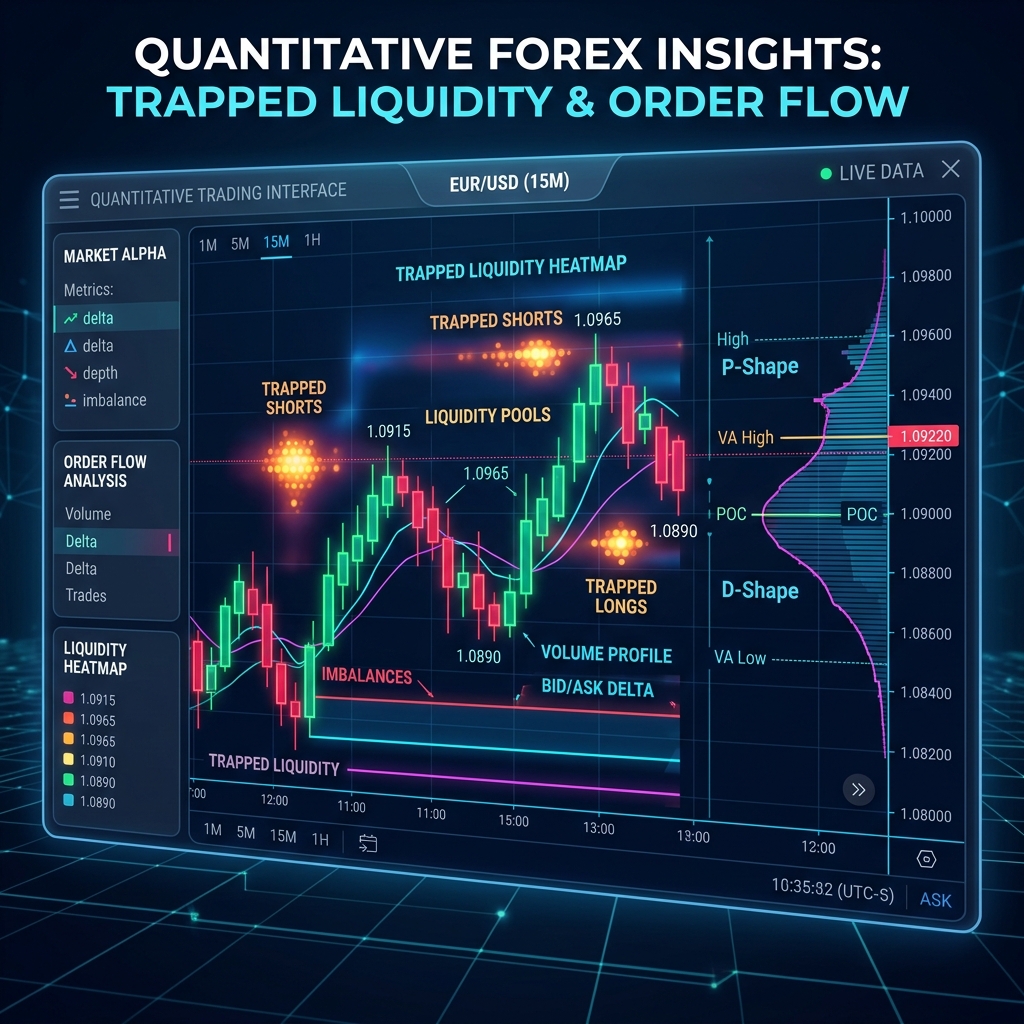
How Retail Long Percentage Helped Us Read The May 20-22 EURUSD Move
How changes in retail long percentage helped separate trap-loading, short covering, and lower-quality two-sided trade conditions during the May 20-22 sequence.
The percentage matters less than the change
A retail long percentage snapshot is useful, but the real information is in how it changes while price moves.
If price drops and the long percentage rises, retail is buying the dip. If price rallies and the long percentage falls, the move may be driven by short covering or larger flow rather than fresh retail FOMO.
Trap-loading versus extreme positioning
The system's early research found that the cleanest fade was not always at the most extreme positioning. The cleaner state was often the trap-loading zone, where retail was still actively leaning into the wrong side.
That matters because markets move on marginal pressure. Fresh wrong-way positioning can provide better fuel than an already crowded extreme that has stopped changing.
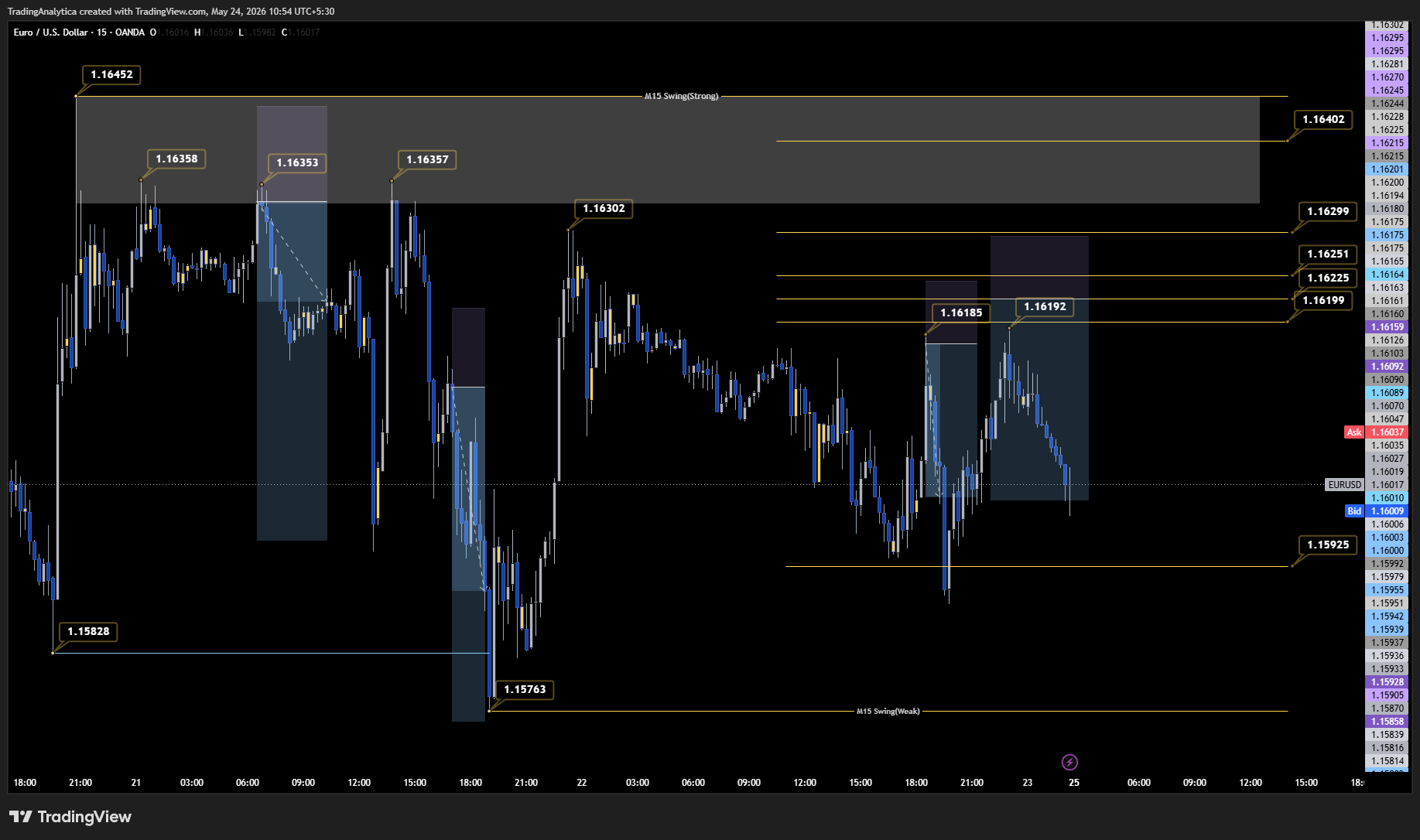
What happened across May 20-22
The May 20-22 sequence was useful because retail behavior did not stay in one simple state. At times, retail was loading into weakness. At other times, the market squeezed without retail aggressively chasing. On Friday, the behavior became less clean as the market rotated both ways.
That is why the trade quality changed from high-conviction retests to smaller probes and more caution.
How to use it without overfitting
Retail long percentage should not be used alone. It needs the auction model, liquidity shelves, and price location around it.
The best use is as a behavioral filter: is retail adding fuel to the thesis, unwinding the thesis, or becoming too balanced to matter?
Use the platform as a decision process.
The goal is not to copy one level. The goal is to learn how auction value, retail behavior, liquidity pressure, delta, and risk rules combine into a trade idea.