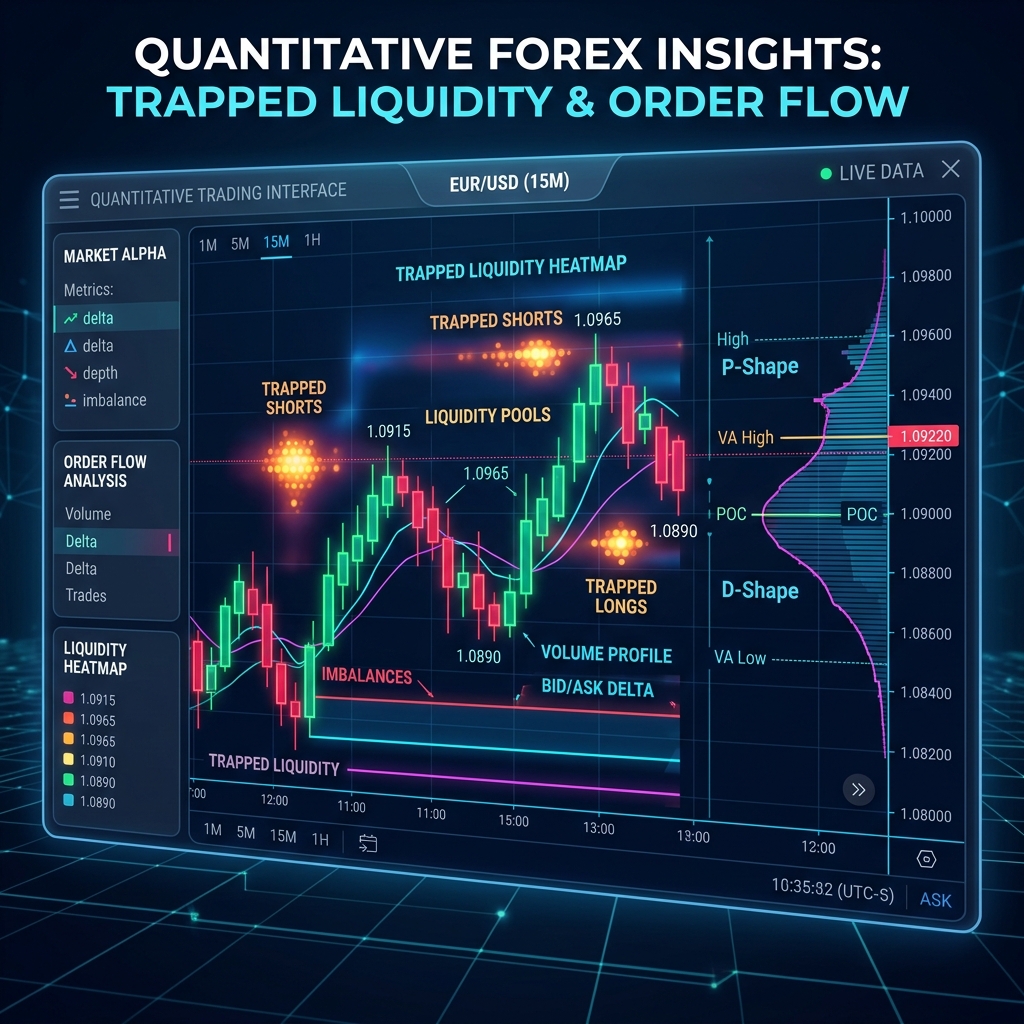
How Liquidity Clusters Build, Absorb, Withdraw, And Migrate
A simple framework for reading liquidity cluster life cycles so a trader can tell the difference between a real wall, absorption, and order migration.
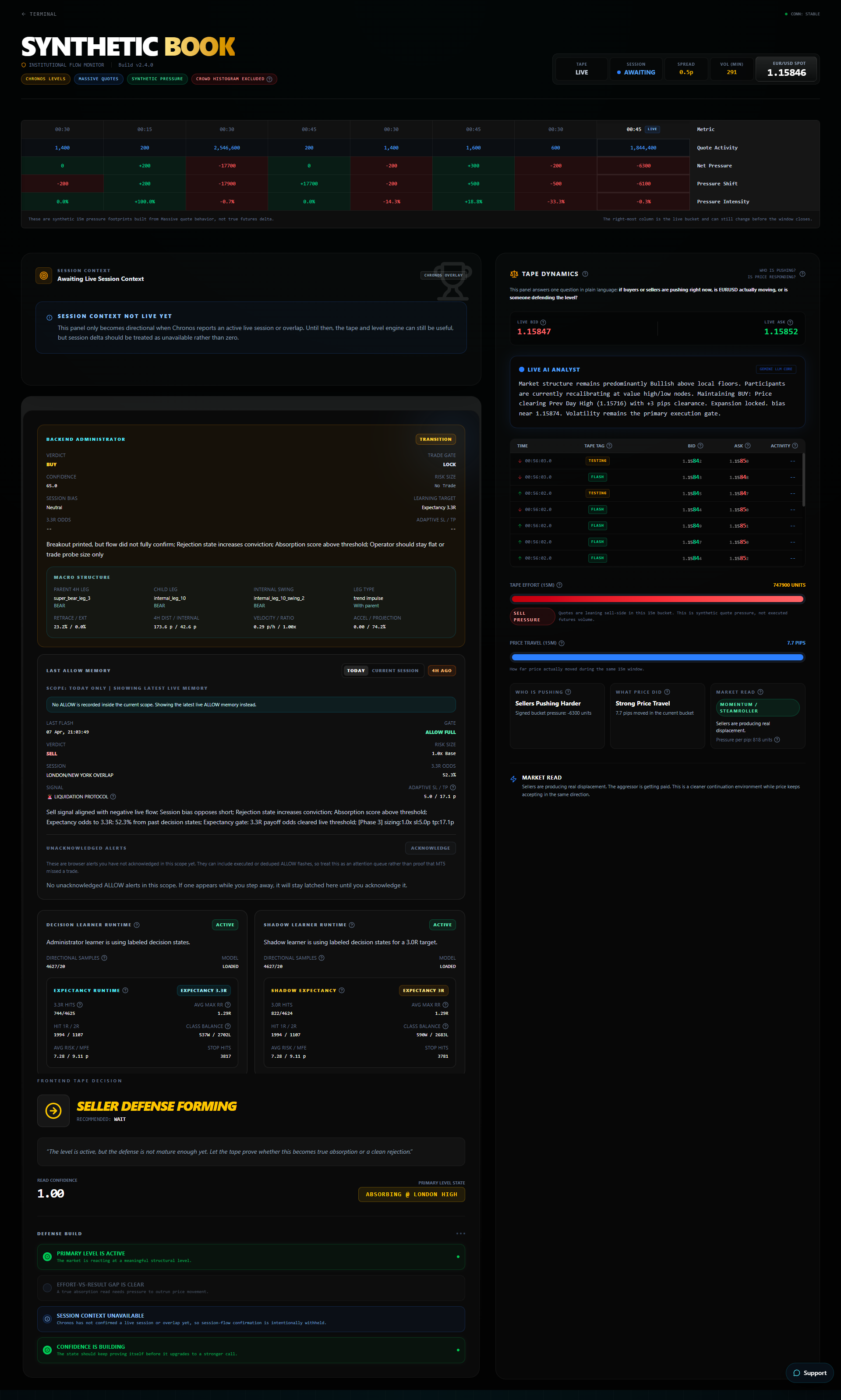
Clusters are not static walls
A common mistake is seeing a large cluster and assuming it must hold forever. Liquidity is alive. It can build, absorb, withdraw, or migrate.
The job is not to worship the cluster. The job is to read what happens to it when price approaches.
Build
A cluster builds when more participants place orders at the same level over time. This often happens around prior highs, prior lows, round numbers, value-area edges, and obvious retest zones.
Build is useful because it tells us a level is becoming important. It does not guarantee the level will hold.
Absorb
Absorption happens when price trades into liquidity and the cluster decreases without price breaking cleanly through the level.
This can mean the market is filling orders at that level. If price keeps failing after absorption, the level is still defended. If price pushes through and accepts, the wall has failed.
Withdraw
A cluster can disappear because orders were pulled, not because they were filled. This is why price action matters.
If price never touched the level and the cluster disappears, that is withdrawal or migration. If price traded into it and then rejected, that is closer to absorption.
Migrate
Migration is when liquidity shifts from one level to another. For example, sellers may move from 1.1630 down to 1.1612 if they want earlier fills, or up to 1.1650 if the market has repriced higher.
This is why the system studies changes across snapshots instead of only reading one screen.
The trading lesson
The best read comes from combining cluster behavior with auction value. A cluster that absorbs at a value-area edge is meaningful. A cluster floating in the middle of chop is weaker.
The cluster tells you where traders are positioned. The auction tells you whether the market is accepting or rejecting that price.
Use the platform as a decision process.
The goal is not to copy one level. The goal is to learn how auction value, retail behavior, liquidity pressure, delta, and risk rules combine into a trade idea.