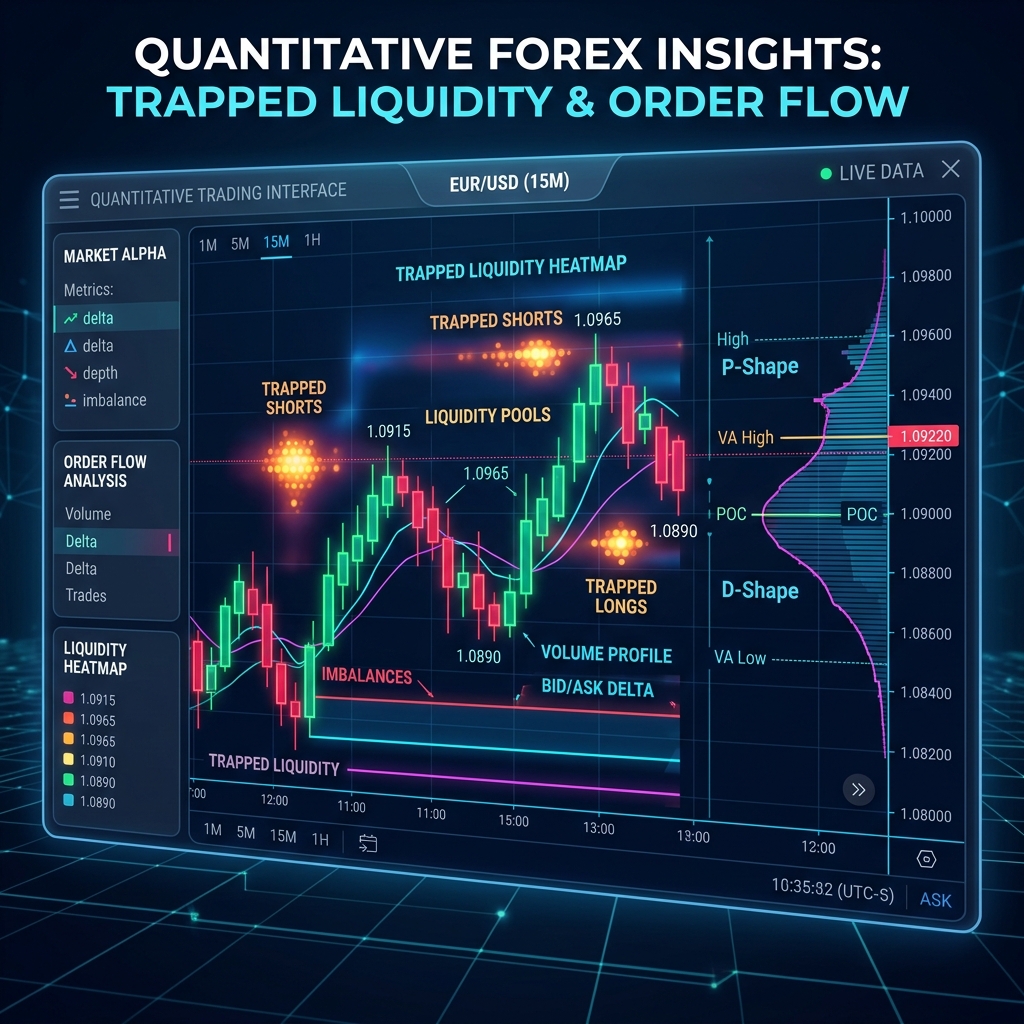
How Auction Value Helps Avoid Late Entries In EURUSD
A practical guide to using VAH, POC, VAL, profile shape, and value migration so you stop selling lows or buying highs after the real entry has passed.
The problem is usually location
Most late entries do not feel late in the moment. Price is moving, the alert looks correct, and the trader feels pressure to act before the move disappears.
The auction model slows that down. It asks a colder question: is price still near a fair entry location, or has it already traveled away from value?
What value means
Value is the area where the market recently did the most business. In the system, we read that through VAH, POC, VAL, profile shape, and value migration.
POC is the center of accepted business. VAH is the upper edge of accepted value. VAL is the lower edge. A trade idea becomes cleaner when price retests one of those edges and fails, instead of when price is already extended far away from them.
- VAH can act like the upper edge of accepted value.
- VAL can act like the lower edge of accepted value.
- POC tells us where the auction is spending time.
- Migration tells us whether value is moving higher, lower, or staying balanced.
Why value migration matters more than one line
A static level is only a reference. Migration is the story. If POC keeps moving lower, sellers are not only pushing price down, they are shifting the market's agreement lower.
That is the difference between a temporary dip and true lower acceptance. In a lower-acceptance session, the better short is often the bounce back into value, not the breakout candle at the low.
How it helped in the May 20-22 sequence
After the May 20 squeeze rejected, later trades were not based on blindly shorting every candle. The cleaner logic was to wait for retests into the upper value and trapped-long shelves.
When price accepted lower and then bounced back toward prior value, the system could plan sell limits above current price. That is auction discipline: let price come back to you.
The simple rule
If price is far below value, do not short only because the move is bearish. Ask where the failed retest would be.
If price is far above value, do not buy only because the move is bullish. Ask whether the market has actually accepted higher or only swept liquidity.
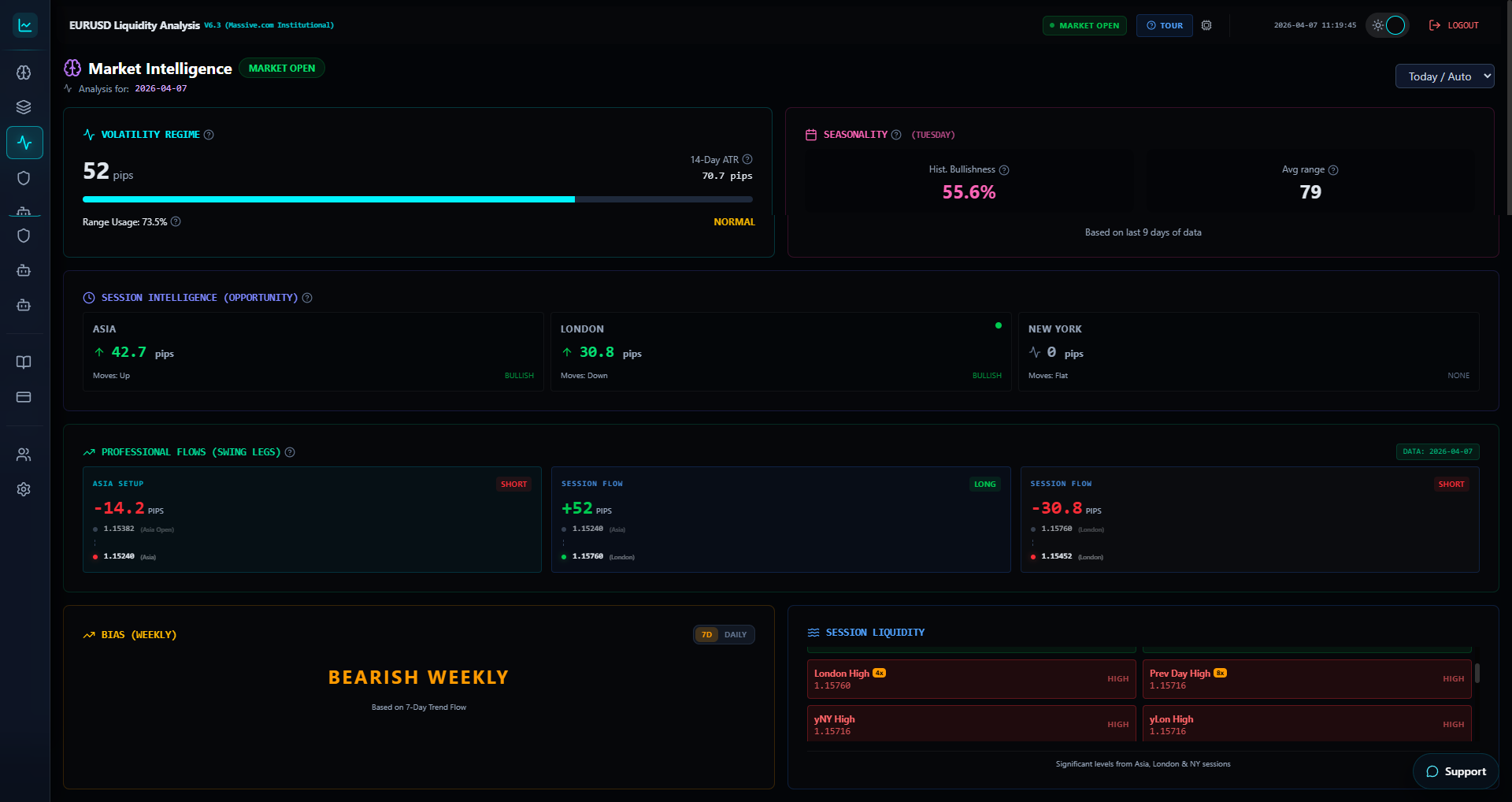
Use the platform as a decision process.
The goal is not to copy one level. The goal is to learn how auction value, retail behavior, liquidity pressure, delta, and risk rules combine into a trade idea.