EURUSD rejected below Asia, paid the 1.16445 short, then warned that late shorts were fuel.
This study reviews the May 29 rotation: higher-timeframe supply held, London made a lower high, the tactical short paid, and the late-session liquidity map flipped from long-trap to short-trap risk.
Research Review, Not Advice
This page explains a recorded market sequence and operator review. It is educational research, not a signal service, not a promise of repeat behavior, and not personal financial advice.
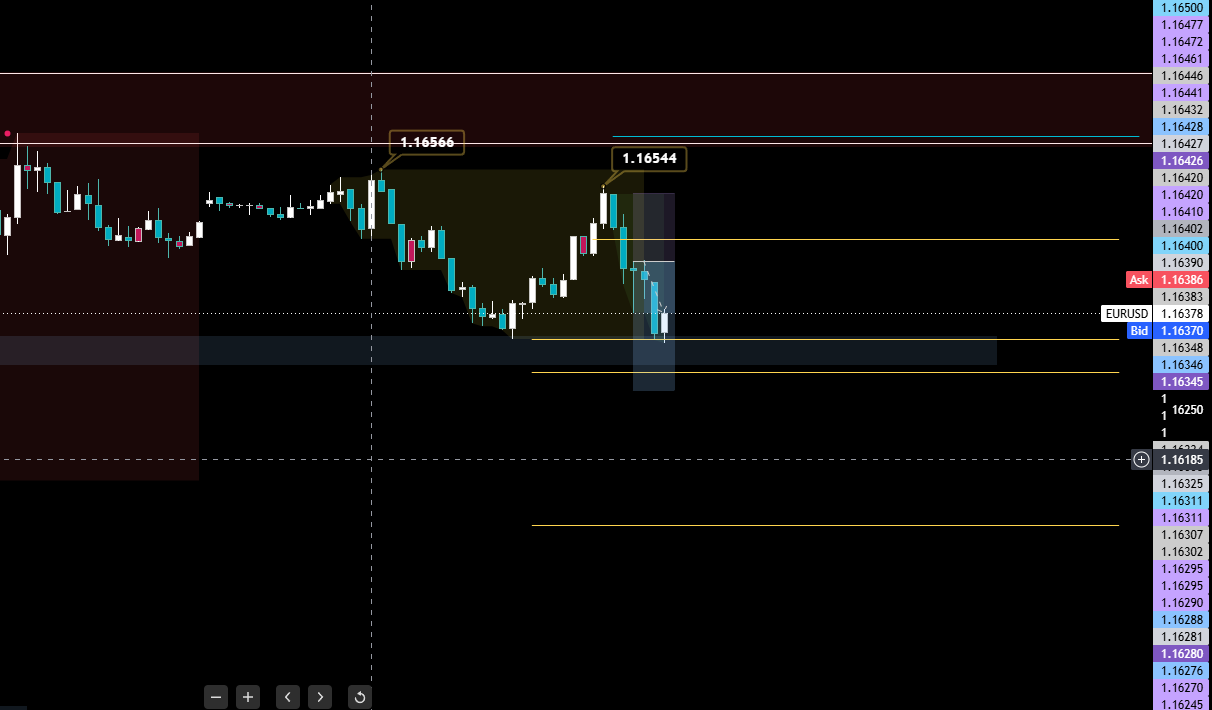
The higher-timeframe rejection zone that kept capping EURUSD attempts.
Asia tested upper value but did not break the broader 4H shelf.
London made a lower high below Asia and failed to accept higher.
The filled sell limit captured the rotation into discount for a visible +$513 result.
Session Sequence
Higher timeframe supply was the starting bias
The day did not begin with a blind short idea. It began with a repeated higher-timeframe cap. Price could rotate higher, but acceptance above that shelf was the condition needed to invalidate the bearish location.
Asia tested the shelf first
Asia reached toward the upper band and backed away. That created the first reference high for London to either reclaim or fail below.
London front-ran the conservative short ladder
London rejected below the Asia high and below the deeper 1.16575+ premium entries. The lesson is important: on rotational days, the best entry can be the lower-high retest after failed acceptance, not only the deepest textbook level.
The 1.16445 short paid into discount
The filled sell limit was not random. It sat below the failed upper shelf, after London had already shown a lower high, with trapped longs overhead and room back toward the lower rotation area.
Late session flipped into short-trap risk
The day did not stay one-way bearish. Later, retail short concentration rose sharply and the system warned that trapped shorts could become fuel. That is why the case study is about rotation, not permanent bias.
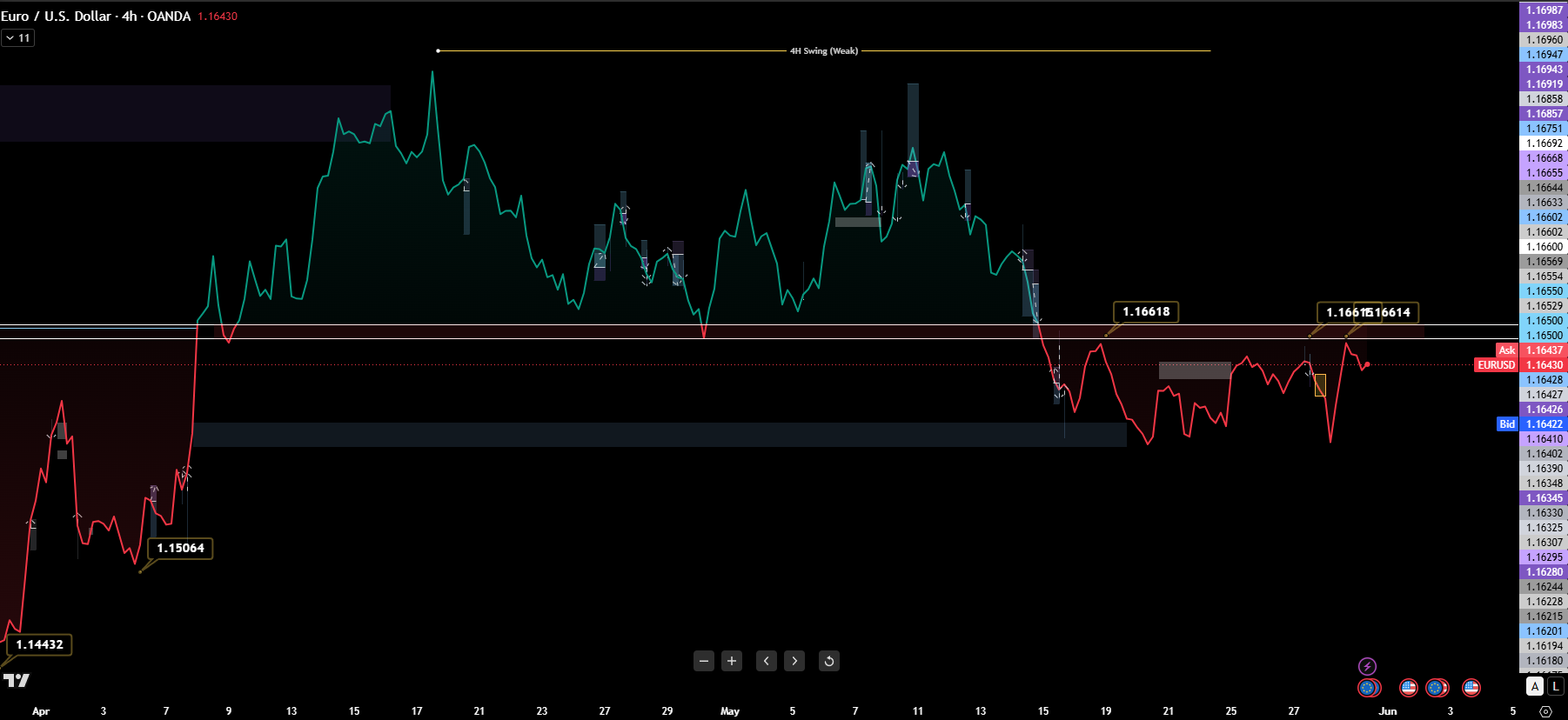
Auction location mattered more than the first candle
The short idea came from price failing at the upper rotation edge. Asia high was 1.16566, London high was 1.16544, and the market could not accept above the 4H supply shelf.
Retail liquidity showed two-sided traps
Longs were trapped into the failed 1.16450-1.16525 push, while shorts were also trapped below 1.16350, 1.16325, 1.16300, and 1.16100. That made the middle dangerous and favored taking profit into discount instead of marrying the short.
The 1.16445 fill was a tactical front-run
Earlier conservative shorts waited for deeper premium. London rejected before that. The actual fill at 1.16445 matched the lower-high structure and paid before the market returned to two-way rotation.
The first target was the lower rotation shelf
The trade closed near 1.16274, close to the lower edge of the intraday rotation. That was the correct behavior for a rotational session: take the range expansion, do not assume clean trend continuation.
Late buy-cascade alerts changed the risk picture
After the short paid, retail shorts became crowded. Later alerts showed long percentage near 39% and short percentage near 61%, with high short-loss pressure. That is fuel for upside squeezes, even when the higher-timeframe zone remains important.
Retail Liquidity Read
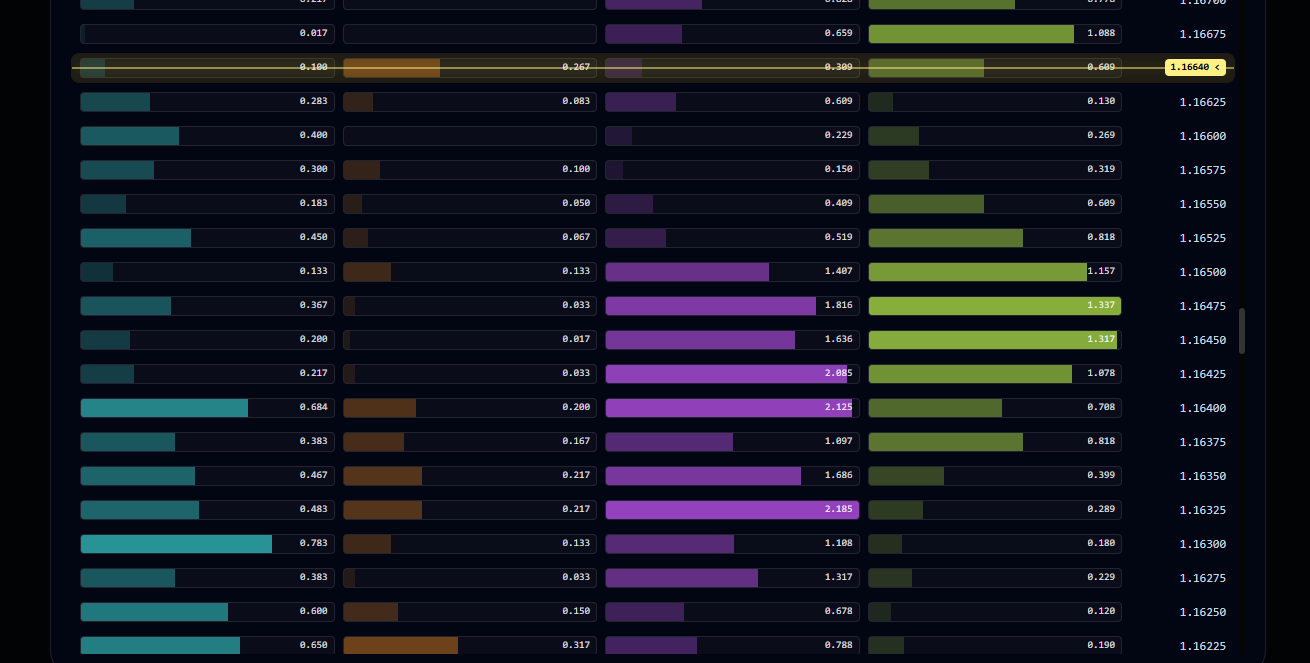
Why the middle became dangerous
After the short paid, the liquidity map was no longer one-sided. Longs were still trapped near the failed upper shelf, but shorts were also trapped below current price around 1.16350, 1.16325, 1.16300, and lower shelves. That is the exact condition where a clean bearish bias can turn into a squeeze if price stops accepting lower.
The public lesson is simple: the first edge was selling the failed upper rotation. The second edge was not to keep selling the middle after late shorts became the new trapped crowd.
Execution Review
The repeated higher-timeframe rejection zone.
First upper test of the day.
London failed below Asia and front-ran deeper premium.
Tactical lower-high short that paid.
Where the paid short was closed.
Later risk zone where shorts could become squeeze fuel.
What The System Should Learn
The correct read was rotation, not pure trend
The 4H zone gave bearish location, but the day still rotated. That is why taking the 1.16445 short into discount was cleaner than expecting uninterrupted collapse.
Middle-zone shorts were lower quality
After the clean leg paid, fresh shorts around the middle became vulnerable. The retail map showed trapped shorts underneath, meaning a bounce could punish late sellers.
The missed lesson becomes a playbook rule
When London opens below Asia high and rejects live upper value, add a small 'London lower-high front-run' candidate instead of waiting only for deep 1.16575+ premium.
A bearish bias can flip into short-squeeze risk
Later buy-cascade alerts were not random. They appeared after shorts crowded into the move. A professional read updates when the crowd flips from long-trapped to short-trapped.