When the right bearish read still loses: EURUSD V-shape reversal and hidden absorption.
This review studies the session honestly. EURUSD broke lower in Asia, trapped late sellers into a convincing breakdown, then reversed back into value and squeezed through the same levels that looked like supply.
Research Review, Not Advice
This is a recorded educational review of a live EURUSD session. It explains evidence, errors, and regime change. It is not a signal service or personal financial advice.
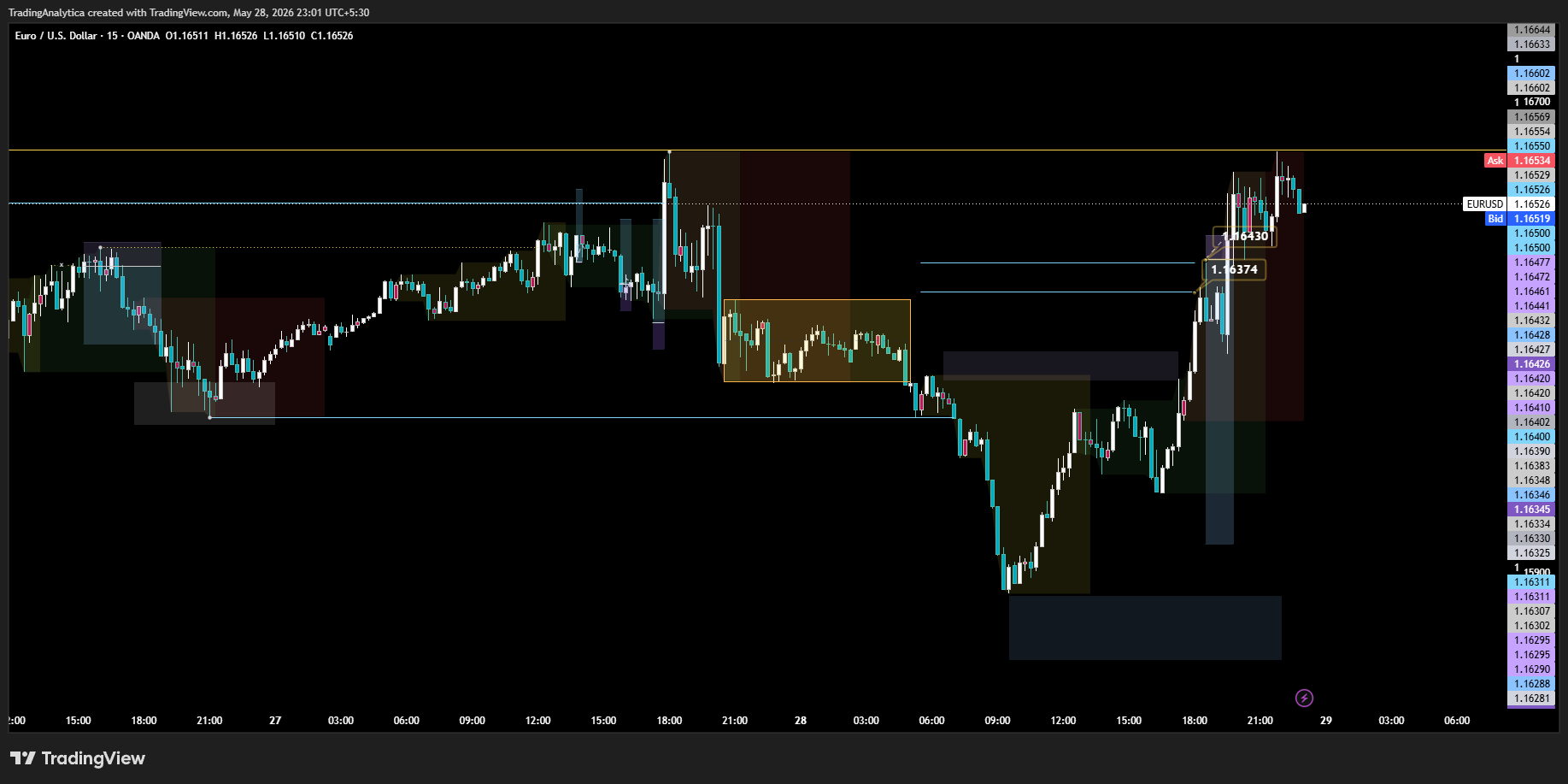
Price accepted below the prior floor early and created a convincing bearish continuation read.
The same session later reversed from discount into upper value and premium.
Price rallied while headline long share fell, pointing away from simple retail FOMO.
The engine saw direction, but blocked normal short sizing because absorption had not released.
The day changed from breakdown to reversal.
Asia breakdown looked real
The initial move was not a random dip. Price broke the prior floor and the bearish thesis made sense from auction structure. The mistake was treating that first acceptance as guaranteed continuation.
Shallow retest short failed
The first short was placed at the shallow retest. Once price reclaimed back into value, that level became chop rather than clean supply.
Premium shorts looked perfect, then failed
The data showed trapped long inventory and overhead supply, but the system also warned that hidden bullish absorption and bullish session delta were fighting the fade. Price pushed through both planned premium shorts.
Value re-entry confirmed the V-shape
The low-R value re-entry alert was not a trade worth sizing, but it was valuable context: price had stopped behaving like breakdown continuation.
Why this looked institutional-style, but not on the sell side.
We cannot identify the counterparty in spot FX. What we can identify is institutional-style behavior: absorption, value defense, liquidity transfer, and forced liquidation through obvious retail shelves.
Retail behavior changed during the rally
Earlier, retail positioning was near the trap-loading zone. During the rally, the long-side percentage fell from roughly 58% toward 54% while price moved higher. That is not normal late retail chasing; it is consistent with short-covering pressure and absorption of sellers.
Overhead shelves were absorbed, not defended
The 1.16375, 1.16425, and 1.16450 areas initially looked like supply. Later snapshots showed that the passive sell pressure around 1.16425-1.16475 had largely disappeared while price traded through the shelf.
Auction moved from breakdown to value re-entry
The live profile still had lower value around 1.1611-1.1631, but price reclaimed above that live value and rotated into previous value. That is the signature of a V-shape reversal, not a clean trend short.
Session flow was bullish, live flow was unstable
London/NY overlap delta was strongly positive overall, while late live delta flipped negative near the highs. That combination explains the violent two-way behavior: the broader session squeezed up, but the top still had liquidation bursts.
The decision engine refused normal sizing
The system repeatedly stayed in TRANSITION. It detected short pressure and sell ideas, but blocked normal approval because hidden bullish absorption and bullish session context were still active.
The levels were right. The regime changed.
Three shorts were logical, but all three were invalidated.
This is the uncomfortable part of the study. The levels made sense before the squeeze, but the live state had already moved into transition. Once value re-entry started working, those shorts became fuel.
What a professional should take from this day.
The bearish idea was valid, but the release was not confirmed
A good market read can still lose if it is executed before the market accepts lower. The stopped shorts at 1.16236, 1.16375, and 1.16425 proved that even logical supply shelves fail when absorption has not released.
Transition is not the same as continuation
When the system says TRANSITION, it means the market is changing hands. In that state, normal-sized directional trades should wait for either clear release lower or confirmed value re-entry.
Low-R alerts are context, not capital deployment
The value re-entry buy had only about 0.40R to its base target, so it was not worth normal risk. But it correctly warned that the short thesis had shifted into V-shape reversal risk.
The professional lesson is regime recognition
The day was not about proving that shorts or longs were right. The lesson was identifying when breakdown continuation had converted into liquidation reversal and short-covering fuel.
This was not failed analysis. It was a regime shift from bearish acceptance into V-shape reversal.
The short idea made sense while price was below value. Once price reclaimed value, the system moved into transition and hidden absorption blocked normal short sizing. The lesson is to respect the blocker: in transition, wait for clean acceptance before deploying real capital.