Structure
Lower highs compressed the supply shelf.
The market did not print one isolated rejection. It printed a descending sequence from 1.16859 to 1.16445. Each rally reached less height before sellers answered.
This study explains why a bullish impulse did not become clean continuation. The evidence stack showed repeated lower supply highs, failed auction acceptance, trapped long vulnerability, and bearish pressure after the top failed.
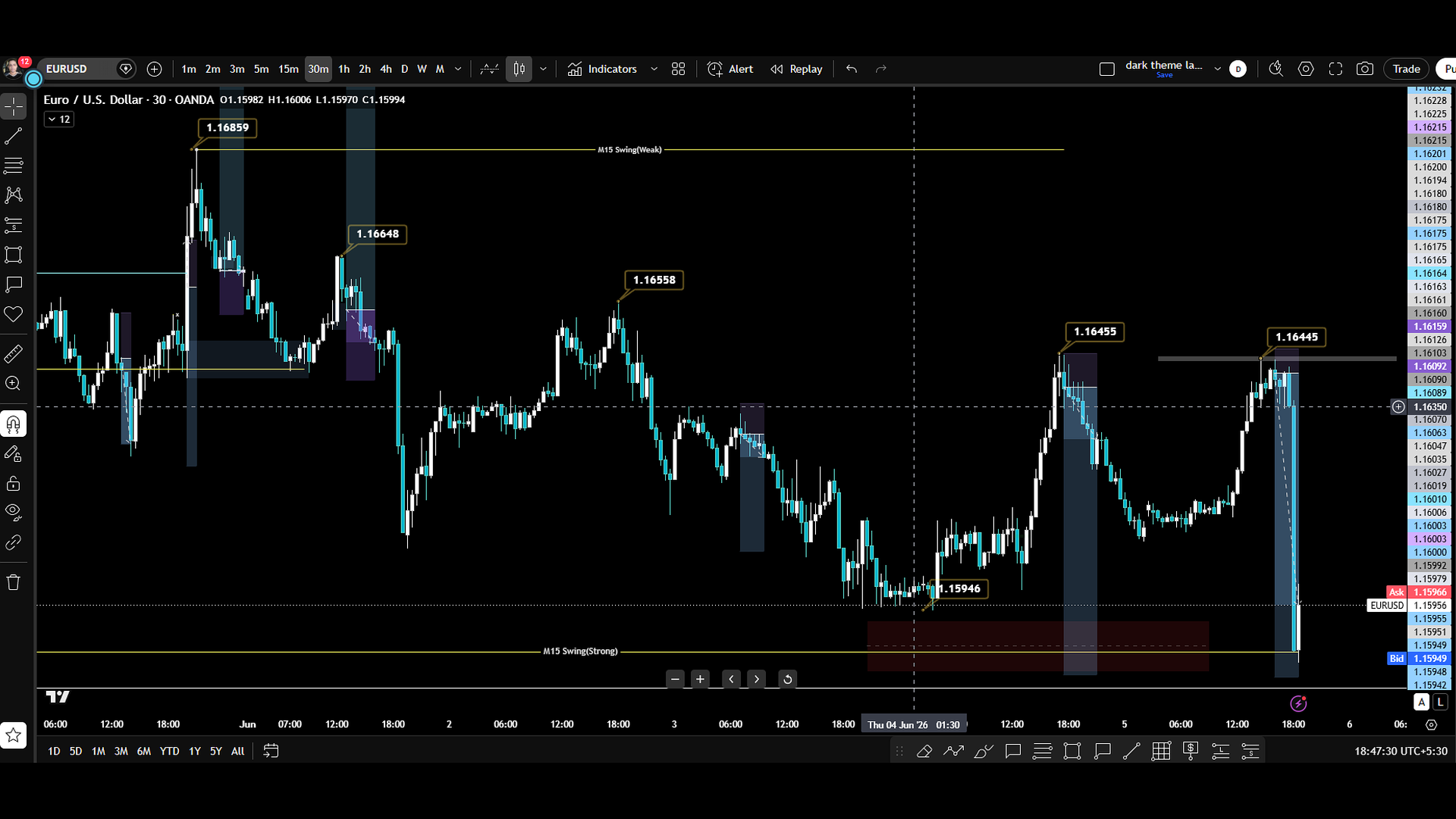
The market did not print one isolated rejection. It printed a descending sequence from 1.16859 to 1.16445. Each rally reached less height before sellers answered.
The upper test could not sustain above the prior supply shelf. Once price lost balance, the auction shifted from a bullish catalyst impulse into bearish acceptance and discount delivery.
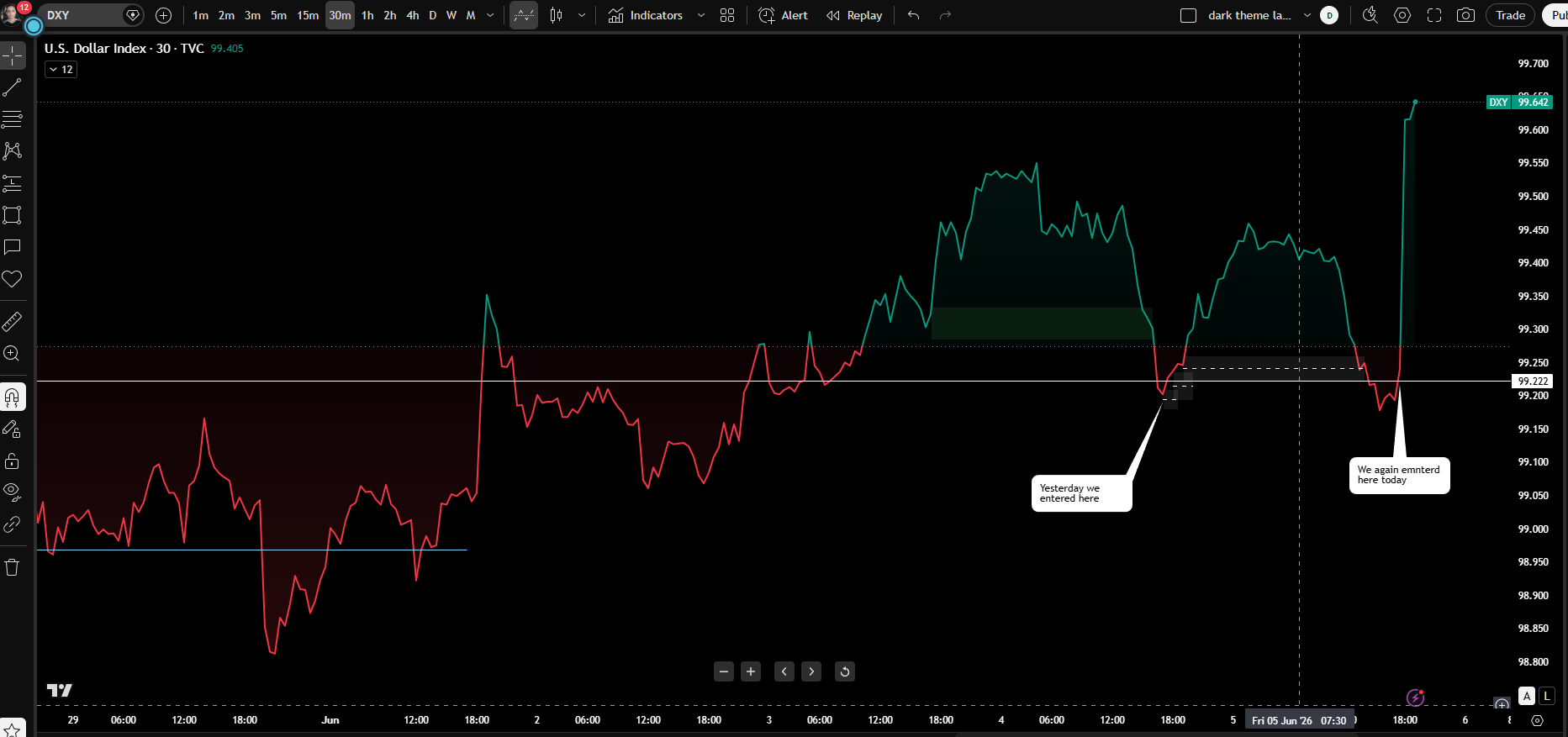
The strongest confirmation came after the high failed. DXY reclaimed sharply, session pressure weakened, and price drove through balance instead of holding the catalyst rally.
The retail positioning archive showed long-side pain expanding after the premium rejection. The edge was not the high alone. It was the high plus failed acceptance plus bearish flow.
We can prove repeated lower rally failures. We can prove the June 5 rally failed below the prior supply high. We can prove the market delivered back into discount after that failure. We can also show the short-side execution row that captured the liquidation leg.
What we cannot prove is the identity of the exact seller. That is why the wording is precise: this was an institutional-style supply footprint, based on repeated market behavior and confirmation layers, not a claim that the platform names the desk.
First major upper rejection in the sequence.
Lower rally high. Supply answered faster.
Premium retest failed again below prior highs.
Catalyst rally faded at the same supply shelf.
Fresh rally failed 10 pips below the prior test.
1.16859
   \
    \    1.16648
     \      \
      \      \   1.16558
       \      \      \
        \      \      \   1.16455
         \      \      \      \  1.16445
          \      \      \      \    \
           \      \      \      \    v
            \      \      \      \   1.15894
             v      v      v      v
1.15864 floor - the lower target zoneThe screenshot below is included only as execution proof. The case study is not telling subscribers to mirror an execution. It shows that the thesis was converted into managed exposure and closed into the liquidation leg.

The London bullishness was not random. Euro buying had a reasonable macro explanation because the market was reacting to ECB rate-hike expectations and inflation pressure. That kind of headline can push EURUSD quickly into premium.
The mistake is treating the headline as final proof. The auction still had to accept above the descending supply ladder. When price failed below 1.16455 and 1.16445, the bullish impulse became vulnerable to long liquidation instead of clean continuation.
The DXY chart added the second half of the story. Once the dollar index reclaimed and accelerated, the euro rally lost its support. That is why the case study reads as catalyst buying into supply, followed by bearish acceptance and discount delivery.
Before the June 5 move, EURUSD had already rejected 1.16859, 1.16648, 1.16558, and 1.16455. That gave the next rally a clear question: can it finally accept higher, or does supply defend again?
London buying had a real macro explanation: ECB rate-hike and inflation-expectation headlines supported the euro bid. But a catalyst is not a complete trade thesis. The market still has to hold higher value after the impulse.
The high formed below the prior 1.16455 rejection. That lower high was the first warning that buyers were not actually controlling the auction above the shelf.
The practical confirmation was the loss of balance after the premium test. When DXY reclaimed and EURUSD stopped holding above the pivot, the short-side read became much cleaner.
Once the upper shelf held, the market delivered toward the lower chart floor. The case study lesson is simple: the best read came from structure, auction, liquidity, and pressure agreeing together.
Do not treat a macro rally as a trade by itself. First ask where the rally is happening. If ECB-supported buying runs into repeated lower supply highs and then fails acceptance, the catalyst can become fuel for trapped longs instead of clean continuation.
A bullish news impulse can still fail if it runs into a defended supply ladder.
ECB rate-hike expectations can explain London bullishness, but they do not guarantee auction acceptance.
Repeated lower highs matter more than one attractive resistance line.
Retail liquidity is useful only after location, auction, and pressure confirm the trap.
Do not short a top just because it is high. Wait for rejection or failed acceptance.
Large-flow behavior is an inference from repeated market reaction, not proof of a named institution.