Back to Case Studies
Case Study - June 4, 2026

EURUSD Catalyst Rally, Supply Rejection, And The Short-Side Read

A practical review of how EURUSD first moved bullish on a macro catalyst, why that did not automatically make the rally sustainable, and how the auction, liquidity map, DXY recovery, and retail behavior shifted the read back toward supply rejection.

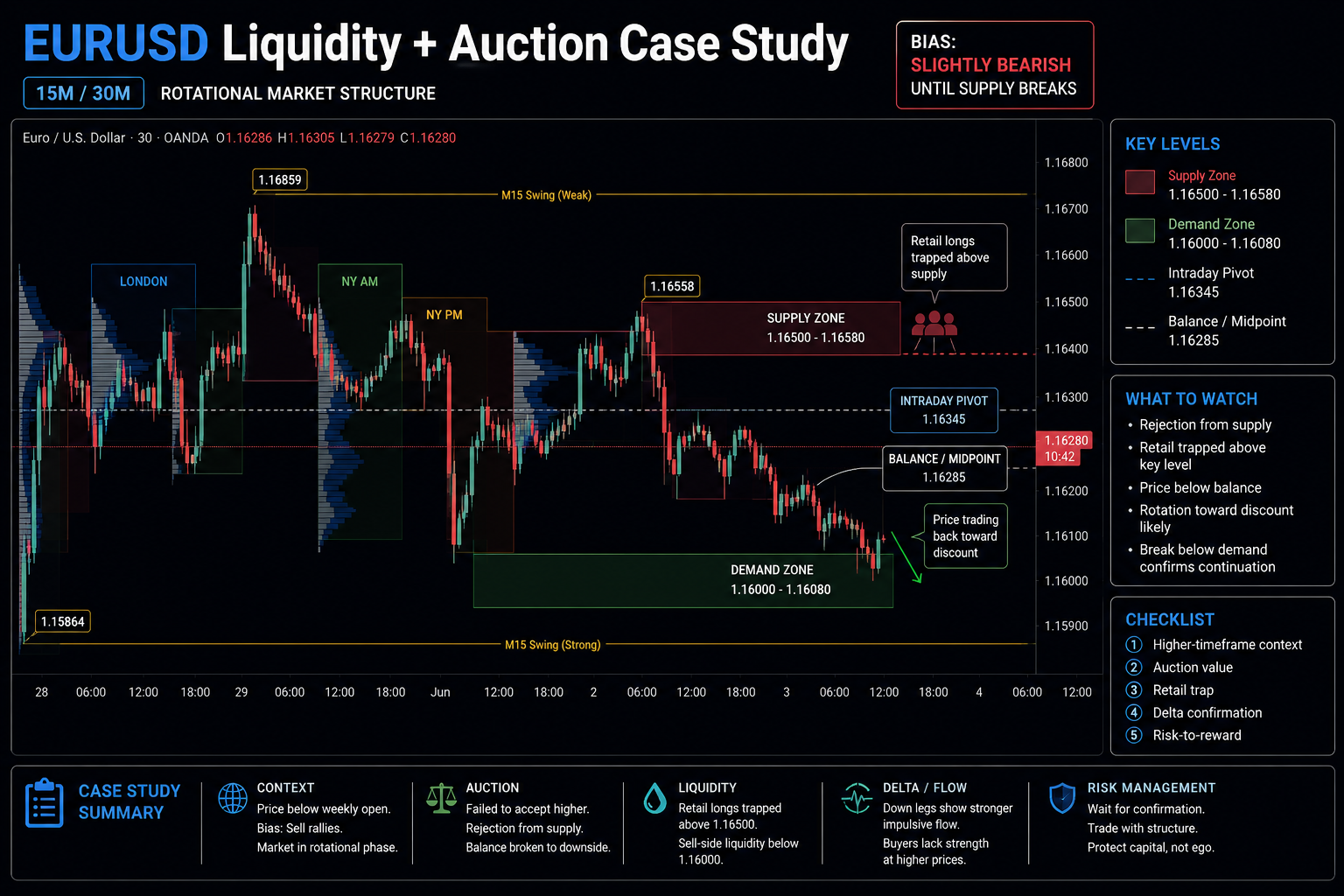
EURUSD liquidity and auction case study overview for June 4, 2026.
Trading Analytica EvidenceEURUSD 15m / 30m - Catalyst Rally Into Supply
Catalyst First

The bullish leg was news-inflated, not a clean value expansion.

The first move higher came from euro-positive macro repricing and headline risk. In that phase, liquidity data can look slow because aggressive news flow moves before retail positioning fully updates.

Auction Test

Price reached upper supply but failed to accept there.

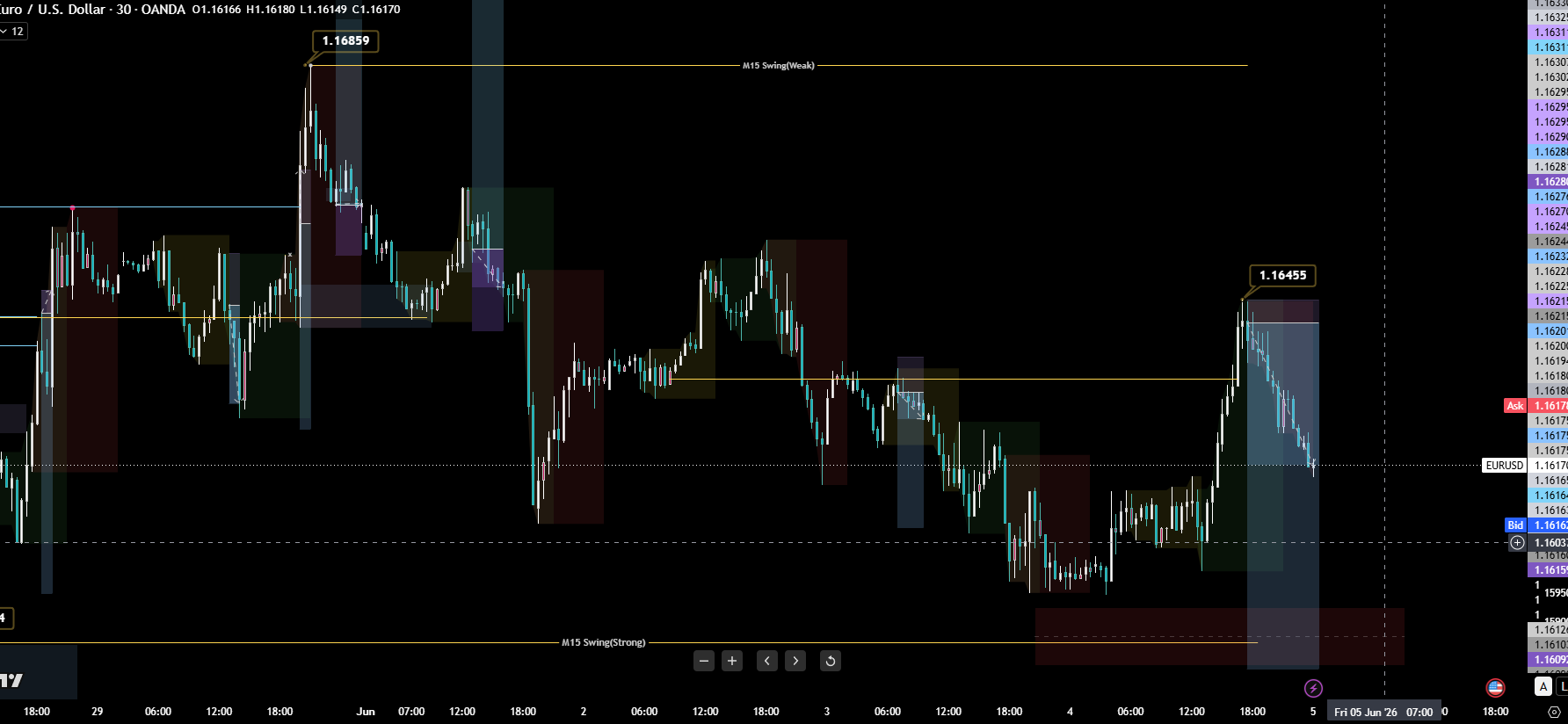
The key was not simply that price was high. The important read was that the rally pushed into the 1.16500-1.16580 supply band, then failed to build stable acceptance above the zone.

Retail Trap

Late buyers became vulnerable above the supply shelf.

After the catalyst rally, retail long exposure remained crowded while price stopped expanding. That combination turns a bullish headline into a trap if the auction cannot hold higher value.

Flow Check

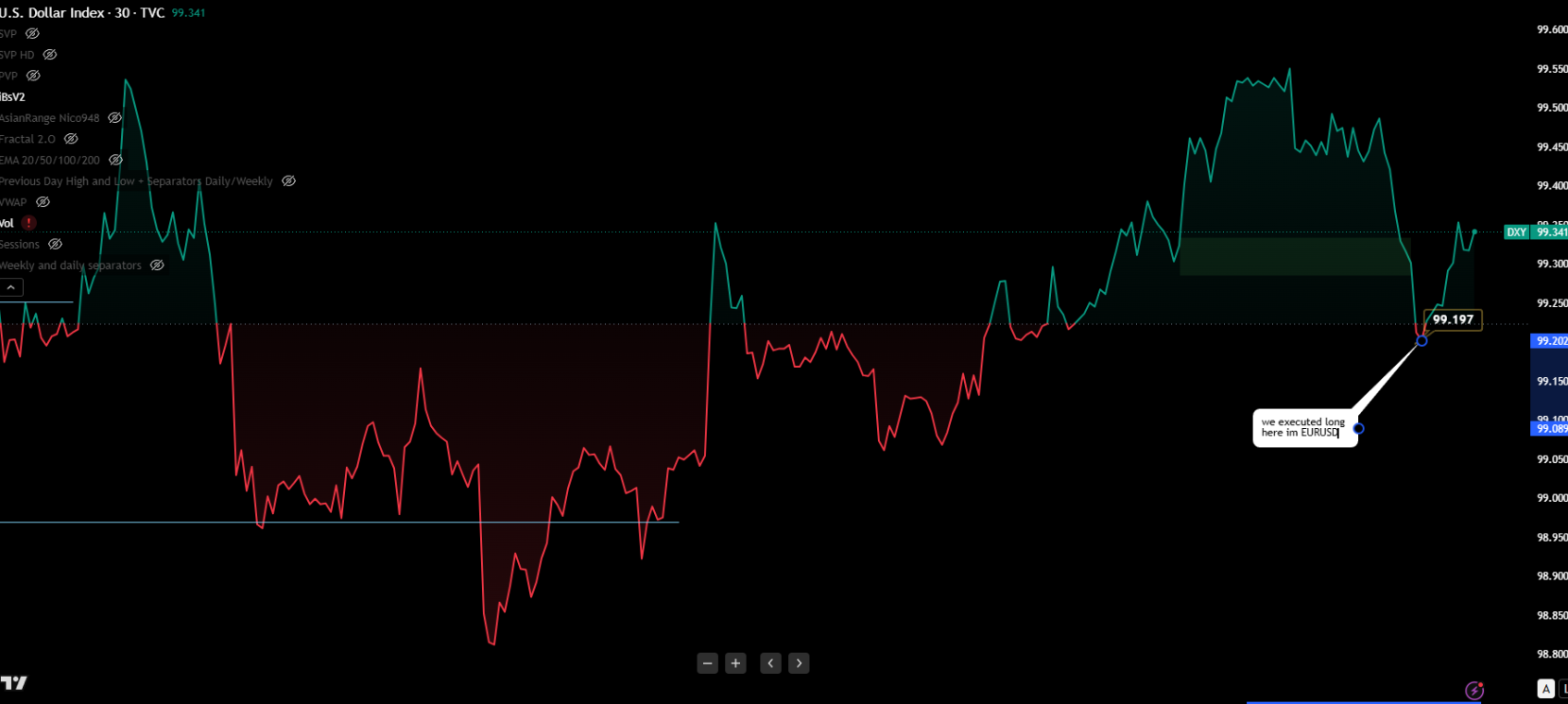
Dollar recovery and weak EUR follow-through confirmed the fade risk.

The DXY recovery mattered because it reduced the quality of the EURUSD long continuation. Once the dollar bounced and EURUSD could not hold premium, the short-side read became cleaner.

The Read: Macro Creates The Impulse, Auction Decides Acceptance

The mistake most traders make on this kind of day is treating the first bullish candle as the full story. The first candle only tells us that the catalyst produced demand. It does not tell us whether the market can hold higher value.

That is why the system read the rally in layers. First came the macro impulse. Then price reached premium supply. Then the auction had to prove acceptance above that shelf. When acceptance failed and price moved back below the pivot area, the rally stopped being clean continuation and became a possible trapped-long event.

The short-side read was valid only after confirmation appeared. Location alone was not enough. The evidence stack needed supply location, failed acceptance, retail crowd vulnerability, weaker EUR follow-through, and DXY recovery.
Key Levels

Supply band
Rally failure zone
1.16500-1.16580
Intraday pivot
Acceptance line
1.16345
Balance / midpoint
Rotation reference
1.16285
Demand band
Discount reaction zone
1.16000-1.16080
EURUSD chart showing the catalyst rally into upper supply and rejection.
Trading Analytica EvidenceEURUSD 30m - Failed Supply Acceptance
DXY chart showing the dollar recovery that pressured EURUSD after the rally.
Trading Analytica EvidenceDXY 30m - Dollar Recovery Confirmation

Session Timeline

Early session

EURUSD lifts on catalyst buying

The market reacts to euro-positive rate-pricing and geopolitical headlines. This creates a fast bullish impulse and encourages late buyers to chase the move.

Supply test

Price reaches the 1.16500-1.16580 resistance band

This is where the read changes from 'bullish impulse' to 'auction decision'. If price accepts above supply, the rally can extend. If it fails, trapped late longs become fuel for rotation lower.

Confirmation

Auction fails to hold premium

Price loses the upper shelf and begins trading back below the intraday pivot and balance. The move stops looking like clean expansion and starts looking like a failed catalyst squeeze.

Execution logic

Short-side read becomes defensible

The short thesis was not based on guessing the top. It came after location, failed acceptance, retail trap behavior, DXY recovery, and weaker EUR follow-through aligned.

Subscriber Lesson

Do not fight the first news candle. Wait for the market to prove or fail acceptance.

The professional read is not "news is bullish, buy" or "price is high, short." It is: catalyst creates impulse, auction tests value, liquidity reveals who is trapped, and flow confirms whether the move is sustainable. On June 4, the bullish catalyst pushed price into supply, but the market could not keep accepting above it. That is why the short-side read became defensible after confirmation.